




Most babies begin crawling somewhere between 7 and 10 months old. Some get moving as early as 6 months; others don't find their stride until closer to 12 months. Both ends of that range are perfectly normal.
Here's something that surprises many parents: crawling isn't even an official developmental milestone anymore. In 2022, the CDC and the American Academy of Pediatrics (AAP) updated their milestone checklists and removed crawling from the list — not because crawling doesn't matter, but because the data shows that babies reach it at such wildly different ages that it doesn't work well as a standardized benchmark. Some babies skip it entirely and go straight to pulling up and walking.
So if your 8-month-old isn't crawling yet, take a breath. What matters isn't whether they crawl on a specific schedule, but whether they're finding some way to move independently and explore their world.
That said, crawling — in whatever form it takes — is still a meaningful moment. It's typically the first time your baby can get somewhere on their own. And that changes everything: for their development, for their confidence, and honestly, for your home.
What Crawling Actually Looks Like
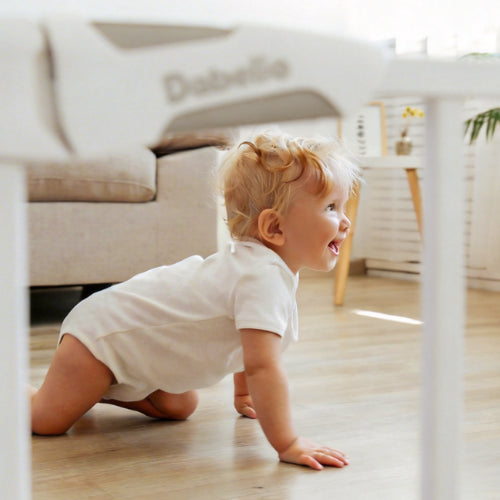
When most people picture a crawling baby, they imagine the classic hands-and-knees position — alternating arms and legs, belly off the floor. And yes, many babies do crawl this way. But plenty of others come up with their own creative solutions, and every single one of them counts.
Classic crawl. Hands and knees on the floor, belly lifted, moving forward in an alternating pattern. This is the textbook version, and many babies settle into it around 8–9 months.
Army crawl (belly crawl). Lying flat on the stomach and pulling forward with the forearms while the legs drag behind. This is often a baby's first attempt at crawling — think of it as the warm-up act. Many babies army crawl for weeks before transitioning to hands-and-knees.
Bear crawl. Hands and feet on the floor — but with straight arms and legs, so the bottom is up in the air. It looks a little like a tiny downward dog. Some babies prefer this style, and it builds excellent leg strength for later walking.
Bottom scoot. Sitting upright and using one or both legs to push forward across the floor. It's not technically crawling, but it absolutely counts as independent movement. Bottom scooters tend to be babies who mastered sitting early and prefer that vantage point.
Backward crawl. Many babies figure out the arm movements before they coordinate the legs, which means they push themselves backward first. If your baby keeps ending up farther from the toy they were reaching for, this is why. Forward motion usually follows within a few weeks.
The roll. Some babies discover that rolling is the fastest way to cross a room, and they commit fully to the strategy. Log-rolling from point A to point B isn't crawling, but it's purposeful movement — and it means your baby is problem-solving.
No style is better than another. Research suggests that babies who crawl in any form develop similar coordination, spatial awareness, and strength over time. The important thing is that they're moving.

Signs Your Baby Is About to Crawl
Crawling doesn't happen overnight. Your baby will give you a series of clues in the weeks leading up to their first real crawl. Recognizing these signs can help you prepare — both emotionally and practically.
Pushing up during tummy time. When your baby starts lifting their chest off the floor using their arms, they're building the upper body strength that crawling requires. Early on, this might just be a brief press-up. Over time, they'll hold it longer and look around while they're up.
Rocking on hands and knees. This is the big one. When your baby gets into the hands-and-knees position and starts rocking forward and back without going anywhere, they're rehearsing the mechanics of crawling. Their brain is figuring out the coordination pattern. Most babies who rock like this start moving within a few weeks.
Pivoting in circles. While lying on their belly, your baby may start spinning in place — rotating 360 degrees while reaching for toys. This means they're learning to use their arms and core to change direction, which is a building block for crawling.
Lunging forward from sitting. Your baby is sitting up, spots something interesting, and throws themselves forward onto their hands. They haven't figured out the "moving" part yet, but they're clearly motivated. That motivation is half the equation.
Getting frustrated on their belly. If tummy time used to be peaceful and is now full of grunting, fussing, and straining, that's actually a good sign. Your baby wants to move and doesn't have the coordination yet. The frustration usually means they're close.
How to Encourage Your Baby to Crawl
You can't force crawling — and you shouldn't try. But you can create an environment that invites it.
Keep tummy time going. The AAP recommends supervised tummy time starting from the first day home from the hospital. By 5–6 months, aim for at least 15–20 minutes spread throughout the day. This is the single most effective way to build the neck, arm, and core strength your baby needs.
Get down on the floor with them. Babies are social. When you lie on the floor at their level, you become the most interesting thing in the room — and a reason to move toward you. Many parents report that their baby's first crawl was an attempt to reach them.
Place toys just out of reach. Not cruelly far — just a few inches beyond their grasp. This creates a low-stakes challenge that encourages reaching, stretching, and eventually scooting forward. When they get it, the reward reinforces the effort.
Minimize time in "containers." Bouncers, swings, walkers, and exersaucers all have their place, but babies who spend too much time in them get fewer opportunities to practice floor-based movement. Think of floor time as practice time.
Let them go barefoot. Bare feet grip the floor better than socks, giving your baby the traction they need to push off. On hard floors, consider a play mat or blanket for cushioning, but let those toes do their job.
Resist the urge to "help" too much. It's tempting to prop your baby into crawling position or move their legs for them. But babies learn best through trial and error — including the errors. Let them struggle a little. That's where the learning happens.
When to Talk to Your Pediatrician
Every baby develops on their own timeline, and there's a wide range of normal. But there are a few situations where it's worth checking in with your pediatrician:
No independent movement by 12 months. If your baby hasn't found any way to move on their own — crawling, scooting, rolling, or otherwise — by their first birthday, it's reasonable to bring it up. This doesn't necessarily mean something is wrong, but an evaluation can rule out any underlying concerns.
Using only one side of the body. If your baby consistently drags one arm or one leg while the other does all the work, mention it to your doctor. Asymmetrical movement patterns can sometimes point to muscle tone differences that benefit from early physical therapy.
Losing skills they already had. If your baby was rolling or sitting independently and then stops, that's worth a conversation. Developmental regression — losing abilities that were previously established — is always something to discuss with a professional.
Your gut says something is off. You know your baby better than anyone. If something feels different, trust that instinct and ask. Pediatricians would far rather hear from a concerned parent who turns out to be fine than miss something that could have been caught early.
The earlier developmental differences are identified, the more effective early intervention tends to be. There's never a downside to asking.

Pre-Crawling Home Safety Checklist
Here's the part that no one tells you about crawling: your baby doesn't send a calendar invite. One day they're rocking on all fours, and the next day they're across the room pulling on a power cord.
The best time to baby-proof is before your baby is mobile. A research study published in Pediatrics found that nearly 100,000 children under 5 were treated in U.S. emergency rooms for stair-related falls over a ten-year period — and the majority of injuries were to the head and neck. Another study estimated that roughly 20,600 infants per year sustain stair-related injuries requiring emergency treatment.
The good news: most crawling-stage hazards are predictable and preventable. Here's a room-by-room checklist you can walk through — literally — with your phone in hand.
Stairs & Hallways
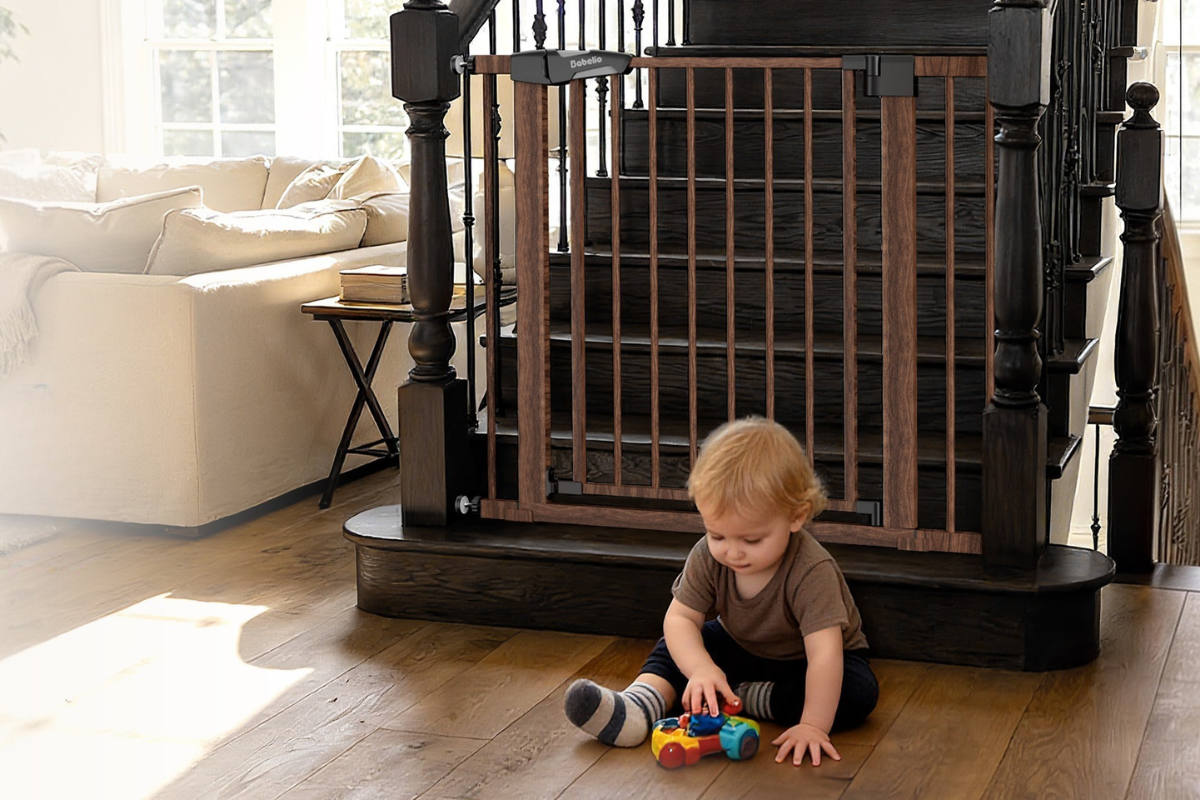
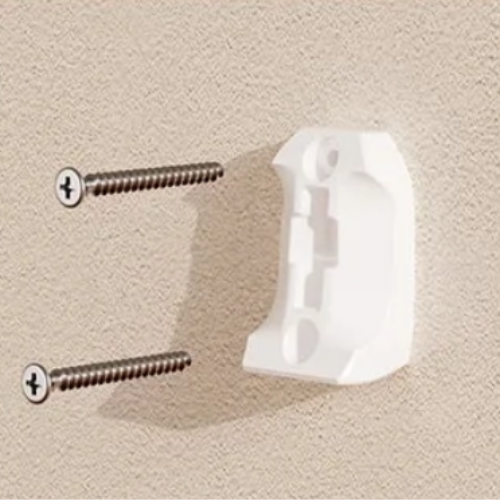
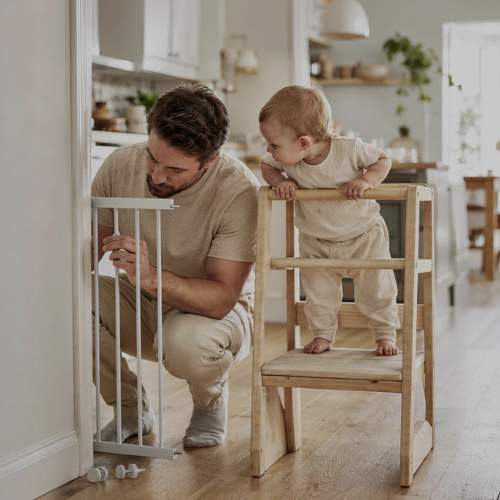
- [ ] Install a safety gate at the top of every staircase. This is the single highest-risk location in most homes. Gates at the top of stairs should be hardware-mounted (screwed into the wall or banister) — pressure-mounted gates can be pushed out of place.
- [ ] Install a gate at the bottom of stairs as well. A pressure-mounted gate is fine here since a fall at the bottom isn't the same risk as one at the top.
- [ ] Check that banister spacing is 3.5 inches or less. If the gaps between your stair railing spindles are wider, a crawling baby can squeeze through.
- [ ] Remove any objects stored on stairs — shoes, laundry baskets, toys. These are trip hazards for adults carrying babies.
Kitchen
- [ ] Install child-safety locks on all lower cabinets and drawers, especially those containing cleaning supplies, sharp utensils, or heavy cookware.
- [ ] Move all household chemicals, detergents, and dishwasher pods to a high cabinet or one with a lock. Dishwasher pods are a leading cause of poisoning calls to Poison Control for children under 5.
- [ ] Secure the trash can with a child-proof lid or move it inside a locked cabinet.
- [ ] Use stove knob covers and, if possible, a stove guard to block access to burners.
- [ ] Keep hot liquids away from counter edges. A crawling baby who pulls up on a table leg can reach farther than you expect.
Living Room
- [ ] Cover all accessible electrical outlets with plug covers or outlet plates. Crawling babies are at exact plug-height.
- [ ] Secure TVs, bookshelves, and dressers to the wall with anti-tip furniture straps. In the U.S., a child is sent to the emergency room roughly every 17 minutes due to a furniture tip-over.
- [ ] Apply corner and edge guards to coffee tables, entertainment centers, and hearths — any hard surface at head height for a crawling baby.
- [ ] Bundle and hide all electrical cords behind furniture or inside cord covers. Loose cords are both a pull-down hazard and a chewing hazard.
- [ ] Move houseplants up and out of reach. Many common varieties — pothos, philodendron, peace lily — are toxic if chewed.
- [ ] Pick up small items daily: coins, buttons, pen caps, pet food kibble. Anything that fits through a toilet paper roll is a choking hazard.
Bathroom
- [ ] Keep the bathroom door closed at all times, or install a door lever lock. Bathrooms contain an unusual concentration of hazards in a small space.
- [ ] Install a toilet lock. Even a few inches of water present a drowning risk for a baby who can pull up to kneeling.
- [ ] Move all medications, vitamins, and personal care products (especially anything with small caps) to a high, locked cabinet.
- [ ] Place a non-slip mat inside the tub and on the floor beside it.
- [ ] Set your water heater to 120°F (49°C) or below to prevent scalding.
Nursery & Bedrooms
- [ ] Lower the crib mattress to its lowest setting before your baby can pull up to standing. Many parents wait too long on this one.
- [ ] Remove mobiles and any hanging items above the crib once your baby can push up on hands and knees.
- [ ] Secure blind cords and curtain strings out of reach, or switch to cordless window coverings. Corded blinds are a strangulation risk.
- [ ] Clear the floor of small objects: hair ties, earrings, laundry detergent pods, any toy with parts smaller than a golf ball.
- [ ] Ensure all furniture is wall-anchored, particularly tall dressers and changing tables.
General (Every Room)
- [ ] Get down on your hands and knees and look at each room from your baby's eye level. You'll spot hazards you'd never notice standing up.
- [ ] Check that all smoke and carbon monoxide detectors are working.
- [ ] Keep purses, backpacks, and diaper bags off the floor or low furniture. They often contain medications, coins, or small items.
Choosing the Right Safety Gate for Your Home

If you glanced at the checklist above, you probably noticed that safety gates came up more than once. That's because stairs and open doorways are where the most preventable injuries happen during the crawling stage.
Not all gates work in all situations, though. Here's a quick guide to matching the right type of gate to the right spot:
Top of stairs — hardware-mounted gates. The top of the staircase is the highest-risk location in a home with a crawling or cruising baby. Safety organizations including the AAP and CPSC recommend hardware-mounted gates here — meaning they screw into the wall or banister post. Look for a no-bottom-bar design so no one trips over a threshold during nighttime nursery runs. Babelio's Boundless series (B17, D8, S12) is built specifically for this use case.
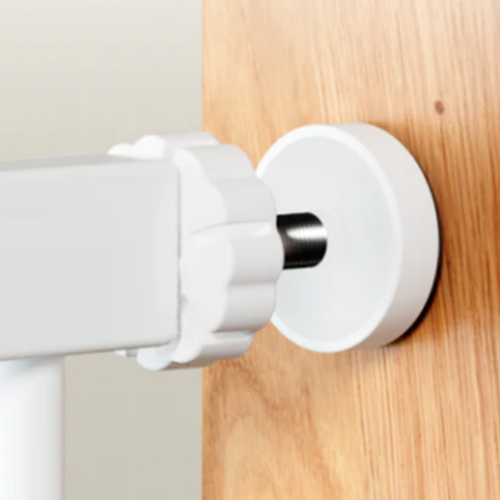
Doorways & hallways — pressure-mounted gates. For blocking off a kitchen entrance, a hallway, or the bottom of stairs, a pressure-mounted gate is a practical choice. No drilling means no wall damage, which is ideal for renters or anyone who'd rather not patch holes later. The PressGuard series (C5, P7) fits openings from 26" to 54.6" and installs in minutes.
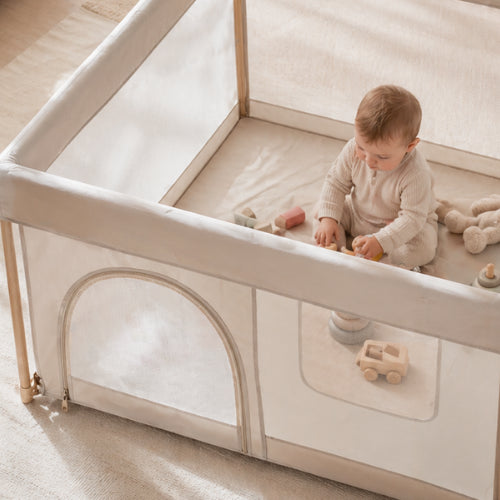
Open floor plans & fireplaces — configurable gates. If you need to block off a large irregular space — a wide living room opening, a wraparound fireplace hearth, or an L-shaped kitchen — a multi-panel system with flexible hinges will give you the coverage a standard gate can't. The AdaptiZone covers up to 104" and bends to fit angled walls.
High-traffic zones — hands-free smart gates. Once your baby starts crawling, you'll find yourself opening and closing gates dozens of times a day, often with a baby in one arm and a bottle in the other. If there's a particular doorway you walk through constantly — the nursery, the kitchen — a gate that opens automatically when it senses you approaching can save you real frustration. The Sensepass uses infrared sensing to unlock hands-free and alerts you if the latch isn't fully closed.
Not sure which type fits your home layout? Take Babelio's 30-second gate quiz to get a personalized recommendation.
FAQ
Do all babies crawl? No. Some babies skip crawling entirely and move straight to pulling up, cruising along furniture, and walking. The CDC removed crawling from its official milestone checklist in 2022 for this reason. As long as your baby is finding some form of independent movement, skipping the crawl is generally not a concern.
Is it normal for my baby to crawl backward? Yes, and it's actually very common. Babies often figure out how to push with their arms before they coordinate their legs, which sends them in reverse. Forward crawling usually develops within a few weeks. In the meantime, enjoy the comedy.
Does crawling style matter? Not really. Army crawling, bear crawling, bottom scooting, and classic hands-and-knees crawling all help build strength, coordination, and spatial awareness. The only time a crawling style warrants attention is if your baby consistently favors one side of their body.
When should I start baby-proofing? Before your baby is mobile — ideally around 5–6 months, when they're starting to sit up and show signs of wanting to move. Baby-proofing after the first crawl means you're already behind.
My baby is 10 months old and not crawling. Should I be worried? Probably not. Many babies don't crawl until 10–12 months, and some skip it altogether. If your baby is engaging with their environment, reaching for objects, sitting independently, and finding other ways to move (rolling, scooting), they're likely developing just fine. If you're unsure, a quick check-in with your pediatrician can provide peace of mind.
This guide was written by the Babelio family safety team. We design and manufacture baby gates — but this article is here to help you understand your baby's development, whether or not a gate is part of your plan. For authoritative guidance on developmental milestones, we recommend the AAP's milestone resources and the CDC's "Learn the Signs. Act Early." program.